De organisatie Fit For Learning is een jonge start-up in het Afrikaanse land Malawi.
Doel van de organisatie is om met eenvoudige middelen te proberen, de gezondheid van kinderen die de basisschool bezoeken, te verbeteren. Gezondere kinderen zijn minder vaak afwezig van school en profiteren daardoor meer van het onderwijs. Hierdoor daalt de drop-out van leerlingen. Het volgen van onderwijs is de manier om uit de armoede te geraken. Door een betere gezondheid hebben de kinderen een betere toekomst: Dit is het hoofddoel van Fit For Learning Africa.
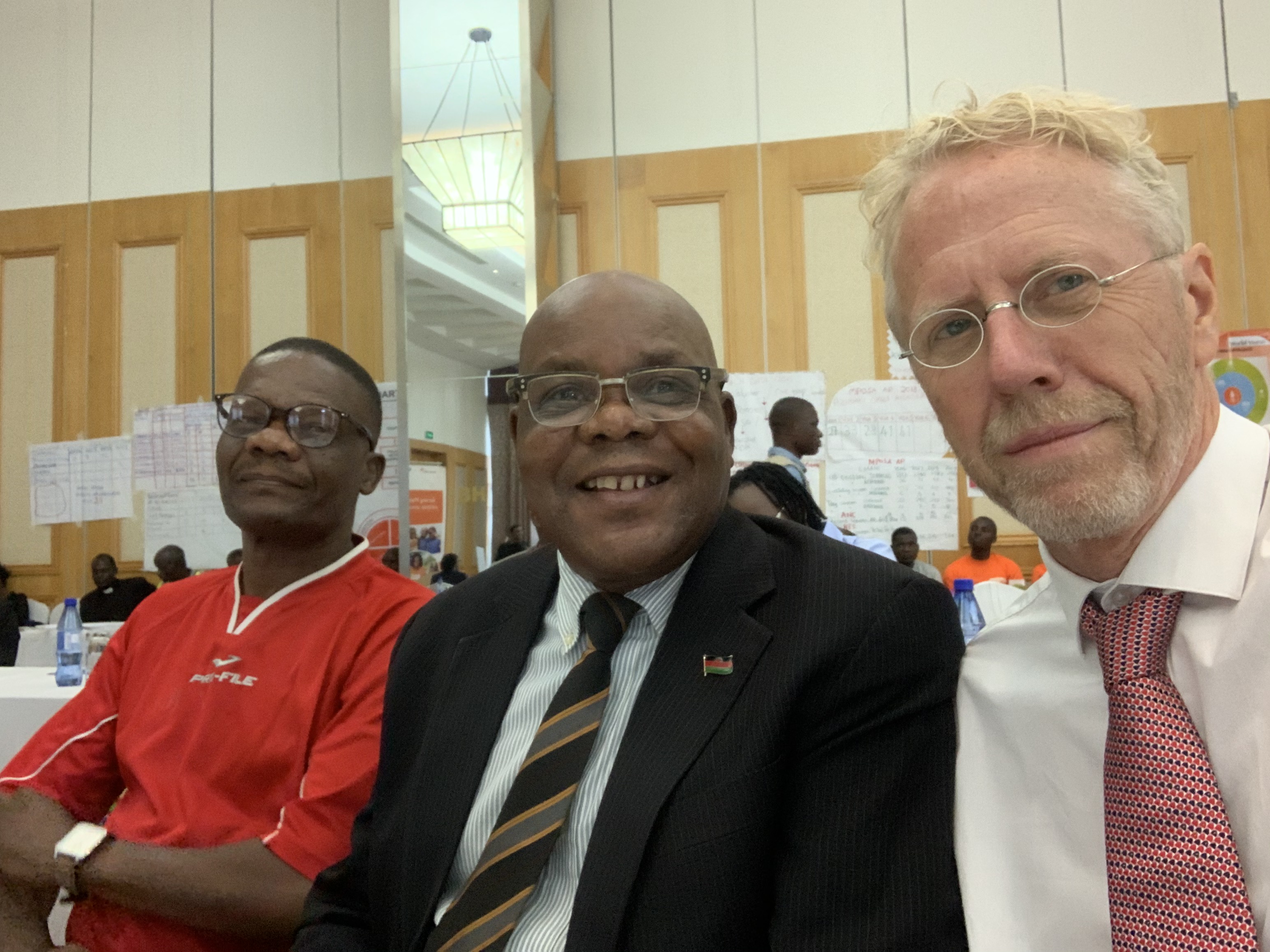
Het Fit For Learning Africa team: Edward Hara, Oliver Ndhlovu, Sytse Fluitsma
Hoe gaan we dit doen?
We willen op de scholen 3 Interventies uitvoeren, dagelijks als onderdeel van het lesprogramma. De interventies zijn: iedere schooldag handen wassen met zeep en tanden poetsen met
tandpasta die fluoride bevat. Verder 2 keer per jaar de kinderen een ontworming tablet geven. Dit noemen wij: De “WASH BRUSH SMILE” campagne.
Wat is daar voor nodig?
Allereerst moet je een geregistreerde organisatie in Malawi zijn, dat zijn we sinds december 2014. De Foundation Fit For Learning Africa is geregistreerd en mag als organisatie. Verder heb je vrijwilligers nodig om te kunnen starten en de uitvoering te begeleiden. Hiervoor is een “taskforce” in het leven geroepen met leden die hun sporen hebben verdiend in onderwijs en gezondheidszorg. Samen hebben we een haalbaarheidsonderzoek uitgevoerd op 2 basisscholen. Dit om te kijken wat er voor nodig is om het hygiene project uit te voeren en of dat binnen redelijke grenzen lukt. De uitkomsten van dit haalbaarheidsonderzoek zijn vertaald in een plan van aanpak:
Plan van aanpak:
1 Haalbaarheidsonderzoek (2014-2015). Is gedaan!
2 Opzetten pilots op meerder scholen in Malawi (2016-2017)
3 Landelijke verspreiding WASH BRUSH SMILE, op alle scholen (2017-2024)
Waar zijn we nu?
Nu moeten we punt 2 van het plan van aanpak uitvoeren, het opzetten van de pilots.
Hier hebben we jullie steun nodig, om van de Foundation Fit For Learning een echte organisatie te maken, met een kantoor en met stafleden. Tot nu toe werkten we met vrijwilligers, maar het opzetten van de pilots vraagt veel meer van de mensen, dus moeten we professionaliseren.
Bij het opzetten van de WASH BRUSH SMILE pilots moet je denken aan het vervaardigen van lesmaterialen voor de docenten, ouders en kinderen en de gemeenschappen. Dit zijn de mensen die het uiteindelijk moeten uitvoeren.
Verder moeten er “wasplekken” worden gebouwd, de klaslokalen moeten hygiënischer worden (vloeren repareren, deuren met sloten, kasten voor bewaren tandenborstels enz), we moeten emmers kopen, ook zeep, tandenborstels en tandpasta. Dat is heel wat, daar hebben we 4 maanden voor uitgetrokken.
Bestuur Fit For Learning Africa
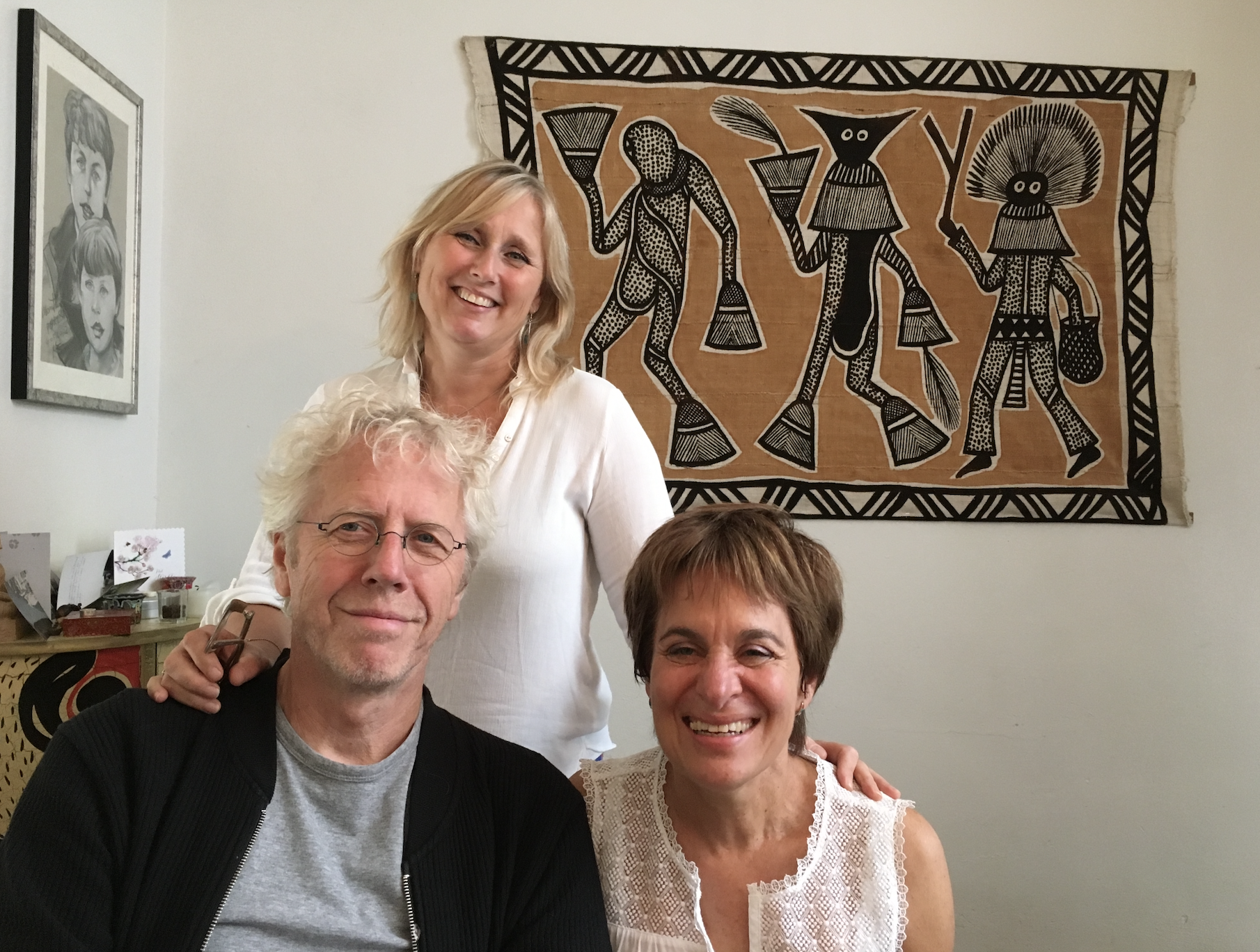
Het huidige bestuur:
– Penningmeester: Naomi Adler
– Algemene zaken: Bernadette Fluitsma Luijf
– Voorzitter tevens ambassadeur: Sytse Fluitsma
Wij hanteren geen beloning voor geleverde diensten van ons bestuur. Onze financiële gegevens zijn op dit moment niet beschikbaar. Dit in verband met de wisseling van het bestuur.
Jaarverslagen
Vanaf 2020 zijn er geen activiteiten meer geweest betreffende Wash, Brush and Smile in verband met de Corona uitbraak, Cholera epidemie in 2021 en de orkaan die het oosten van Afrika heeft geteisterd waaronder Malawi. We hopen dat er het komende jaar weer activiteiten gepland kunnen worden.
PROGRESS REPORT ON THE WASH BRUSH AND SMILE PROJECT 2019
- Introduction
Malawi, in East Africa is one of the poorest nations in the world (WHO, 2014). Among the many problems that exist in a poor country, the poor health condition of school children deserves more attention. They suffer continuously from “child diseases” that challenge their physical, mental and social development. Ignorance of this problem contributes to stagnation in the countries progress in all fields. Information and practical approaches that can improve schoolchildren’s health is lacking. One way to handle this problem is to inform all levels of the society and collaborate with local communities to stimulate and enable them to take matters in their own hands.
The main purpose of Fit for Learning (FFL) is, by stimulating local communities, parents and teachers of primary schools, to install the WASH BRUSH SMILE program with healthy school activities and creating a healthier environment for the children. By doing so, they can achieve control over improving conditions which encourage them to sustain their activities and obtain ownership of their school health program with which ultimately achieve full potential of their children’s education.
- Background
- The Concept
The Wash, Brush and Smile program is conceptualized on the fact that children learn better when they are healthy. The deliberate effort to make children wash their hands and brush their teeth as a habit with which they stay at school and grow up provides opportunity to the child to concentrate in class work without disturbance coming in due to avoidable illnesses that result from the incidents of common child diseases such as diarrhoea, pulmonary infections, soil transmitted helminth (STH) infections (worms) and tooth decay through installing a school health program, called: WASH BRUSH SMILE (WBS). The children are subjected to a routine oral hygiene by brushing teeth with fluoride toothpaste and hand washing with soap each time they visit the toilet, and each time before and after they take food or play in soil and water environments. This concept is deliberately targeted on junior standards one and two for easy adaptation because children maintain what they have learned while youth.
- The Goal and Objectives
The main goal of the Wash, Brush and Smile Project is to promote good learning environment for school children so that they concentrate in class and improve their academic performance and achieve their education potential while also reducing the school dropout of girls and boys due to avoidable illnesses in primary education.
The objectives of the project are as follows:
- To improve the education standards for standard 1 & 2 junior primary school learners in 20 targeted primary schools by 31st December 2019
- To reduce disease contraction by school learners by 90% in 20 schools by 2019
- To increase class education performance and passing rate of standard 1 & 2 school learners in 20 primary schools from current 40% to 75% by 2019
- To reduce school dropouts for standard 1 & 2 learners and girls in 20 primary schools from the current 50% to 10% by 2019
- To improve nutrition status and increase attendance of standard 1 & 2 school learners in 20 primary schools so as to reduce diseases which come as a result of malnutrition and absenteeism and drop outs which result from hunger by 2019
- To improve school sanitation and environment so as to reduce incidents of diseases at 20 primary schools by 2019
- The Scope
The WBS project is relevant and in line with the School Health and Nutrition and WASH program in that it encourages improvement of the standards of education in Malawi considering that there has been a remarkable increase of school drop outs, absenteeism and poor class performance, especially in junior primary schools due to avoidable diseases contracted by inadequate personal hygienic habitual practices. There has also been poor performance in class due to poor health of the learners. The project has targeted 19 schools in Machinga and 1 in Lilongwe on a pilot basis, with the intention of extending to other schools in the country when it succeeds in the selected pilot living schools. The project will be implemented along the WASH program being implemented by SHN with funding from UNICEF with a strong advocacy for community and schools participation and ownership. At the end of the project, it is expected that learners in standard 1 & 2 will take washing hands and brushing teeth as a habit, and improve their class performance with substantial improvement of their health.
- Methodology
- The WBS project starts with orientation of the Wash Brush Smile program to District Education Offices, coordinated by the SHN Coordinators
- Visitation to the 19 selected living primary schools (1 in Lilongwe and 19 in Machinga) during which essential data is collected on the enrolments, sanitation, number of teachers available and water supply situation
- Training of District Trainers (DTs) in a Training of Trainers exercise comprising the SHN Coordinator, Environmental Health Officers and one officer from water department, where they are taken through the Training Manuals which guide on hand washing and teeth brushing, with the importance of doing so explained.
- The DTs in turn train a team of implementers at each school which includes 1 x Headmaster, all Standard 1 & 2 teachers, 1 x PTA and 1 x SMC representatives, and 1 x Mother Group representative.
- Each school will be provided with cement to construct wash stands on which to place tapped buckets in which will be water; and soap will be provided for washing hands. The community of the school will provide bricks, sand and labour for the construction of the wash stands.
- Each school will be issued with tooth brushes and fluoride toothpaste for use by the children to brush their teeth
- Each school will also be issued with sanitation pads for use by girl learners in the Menstrual Hygiene Management (MHM) initiative, with emphasis that these will be samples from which to initiate learning on how the mother groups and the girls can make their own as one way of ensuring supply sustainability.
- Each school will be provided with brooms and disinfectants to ensure adequate sanitation and cleanliness around the school premises and toilets.
- The project will procure the materials and issue to the schools, with instructions, through training, on how to use them, with the understanding that the community through the School Management Committees, Parent Teacher Associations and Mother Groups assisted by the teachers will initiate resource mobilisation to continue supplying the required materials as one way of ensuring sustainability of the program when donors pull out from support.
- Close monitoring at all levels will be done to ensure that the WBS project is implemented according to the plan and training provided, with well drawn indicators.
- An evaluation will be carried out to assess the project impact and to justify its possible extension to other schools in the country on a multiplier effect.
- Major Outputs
- Since its inception the implementers have come up with the following outputs presented in the table below:
Table 1. Activities and Major Outputs of the WBS Project
| DATE | ACTIVITY | INVOLVED | MAJOR OUTPUT | |
| 08.03.2019 | Discussions on 1st WBS Budget | Dr Fluitsma and Virginia Kachigunda | Draft Budget | |
| 18.03.2019 | Orientation with SEST | SEST and Dr Fluitsma | MOU Draft | |
| 26.03 2019 | Meeting at UNICEF to map up cooperation and collaborative arrangements in support of WBS initiated by FFLA following pitch at UNICEF office; proposal to come up with MOU between MOEST and Dr Fluitsma who becomes Technical Advisor | Klmanzi Muthengi, Pickmore Swira, Shavaner Chamba, Clara Chindime and Dr Fluitsma | MOU Draft | |
| 05-26.04.2019 | Discussions on MOU Draft and finalizing for MOEST processing | Virginia Kachigunda, Pickmore Swira, Dr Fluitsma | MOU signing by Dr Fluitsma | |
| 08.05.2019 | Meeting at UNICEF to define roles of SHN and FFLA in the WBS implementation | Clara Chindime, Violet Tembo, Virginia Kachigunda and Dr Fluitsma | Procedure of processing funding, disbursements and utilization thereof based on MOU | |
| 08.06.2019 | FFLA Board meeting to discuss progress report on WBS project with UNICEF possible funding | Dr Fluitsma, Hendrix Nkunika, Feloxy Sbale (Chair), Enock Phale (Co-founder) | Minutes of meeting | |
| 09.06.2019 | Meeting to rope in Oliver Ndhlovu to assist Dr Fluitsma in establishment of FFLA in Malawi | Dr Fluitsma, Hendrix Nkunika and Oliver Ndhlovu | MOU between Dr Fluitsma and Oliver Ndhlovu | |
| 10-13.06.2019 | Preparation of Draft FFLA Budget and Project Proposal for submission to SHN and UNICEF based on SHN Draft Budget of same | Oliver Ndhlov, Dr Fluitsma | Draft Budget and project proposal | |
| 18.06.2019 | Meeting with SEST to follow up on MOU | Dr Fluitsma, Oliver Ndhlovu, SEST | SEST commitment to speed up process through relevant personnel | |
| 19.06.2019 | Introduce Oliver; Pitch at UNICEF on operationalization of WBS project; allocated 20 shcools (19 Machinga and 1 Lilongwe) on pilot basis, with possibility of expansion upon successful implementation; subsequent recommendation to have holistic approach to project by including other sanitation and nutrition interventions, | Clara Chindime, Violet Tembo, Dr Fluitsma and Oliver Ndhlovu | Offer of Project to FFLA by UNICEF | |
| 28.06.2019 | Submission of draft budget and proposal to UNICEF | Virginia Kachigunda, Dr Fluitsma , Oliver Ndhlovu | Draft Budget and Proposal | |
| 2 .7. 2019 | Changes/Advice on WBS proposed activities and budget by UNICEF | Dr Fluitsma, Virginia Kachigunda, Pickmore Swira and Oliver Ndhlovu | Advisory note from UNICEF | |
| 27.07.2019 | Letter to MOEST requesting authority to utilize funds from UNICEF while waiting for MOU that had to be sent for litigation at Ministry of Justice | Oliver Ndhlovu, Mrs Milner | Letter to MoEST | |
| 13-17.07.2019 | Meeting to revise of budget and proposal | Dr Fluitsma, Virginia Kachigunda, Pickmore Swira, Shavaner Chamba and Oliver Ndhlovu | Revised budget and Project Proposal | |
| 23.07.2019 | Meeting to revise WBS Manuals for District Trainers and Teachers | Dr Fluitsma, Virginia Kachigunda, Pickmore Swira, Shavaner Chamba and Oliver Ndhlovu | Revised Manuals | |
| 31.07 2019 | UNICEF advises funds transfer to MOEST based on revised budget | Clara Chindime, Oliver Ndhlovu | Advisory note from UNICEF | |
| 03.08.2019 | MOU signed by SEST | SEST | MOU signed by SEST | |
| 7.8.2019 | WBS Manual drafts presented | Dr Fluitsma | ||
| 24.08.2019 | Board meeting to discuss progress of WBS project and introduce Oliver | Dr Fluitsma, Fexony Sibale, Enock Phale, Hendrix Nkunika and Oliver Ndhlovu | Minutes of Board meeting | |
| 24.08.2019 | WBS Budget and Action plan sent to SEST and later approved for processing at MOEST accounts office for release of funds | Virginia Kachigunda, Pickmore Swira | Signed approval by SEST | |
| 06.09.2019 | Meeting with AfriPads Coordinator, Elise to discuss long term cooperation on supply of reusable sanitation pads | Dr Fluitsma,Oliver Ndhlovu, Else | Sanitation pads samples and handbooks for MHM | |
| 10.09.2019 | Editing Training Manuals and planning training program | Dr Fluitsma, Oliver Ndhlovu | Final Draft | |
| 15.09.2018 | Meeting with SHN/FFLA to discuss progress of WBS project activities and updates on funding | Dr Fluitsma, Oliver Ndhlovu, Shanaver Chamba, Albert Saka, Alick Kafunda | Minutes | |
| 16.09.2019 | Meeting with Water Evaluation & Sanitation Network (WESNET) to discuss possible partnership with FFLA | Dr Fluitsma, Oliver Ndhlovu, Mwandira and | Registration Form for membership | |
| 22/09/2019 | Meeting with SHN/FFLA and Lilongwe SHN Coordinator to discuss roll out of WBS program in Lilongwe | Dr Fluitsma, Pickmore Swira, Alick Kafunda, Joseph Kanyangala and Oliver Ndhlovu | Minutes | |
| 26/09/2019 | Orientation visit to Nankhali School to appreciate situation and introduce WBS project concept | Dr Fluitsma, Oliver Ndhlovu, Joseph Kanyangala, Head Teacher and Deputy Head Teacher | Data Collection Sheet | |
| 27/09/2019 | Orientation meeting with District SHN, Health and Water Officers on the WBS project concept | Dr Fluitsma, Oliver Ndhlovu, Joseph Kanyangala, Water Officer and Health Officer | Attendance list | |
| 17/10/2019 | Signing of Contractual Agreement and submission to MOEST (PWC) | SEST, SHN Director, Human Resource Management and TA Dr Fluitsma | Signed Contractual Agreement | |
| 28/10-01/11/2019 | Orientation of WBS project concept to 19 living schools in Machinga District | Dr Fluitsma, Oliver Ndhlovu, Rodwell Tonde, Margaret Kanyongolo | Attendance list and Visitors Books at schools visited | |
| 06-09/11/2019 | Training of District Trainers, and observation of District Trainers performance at selected schools; Part-delivery of some project materials (menstrual pads, soap, buckets, toothpaste, toothbrushes and cement) | Dr Fluitsma, Oliver Ndhlovu, Edward Hara, M. Kanyongolo, R. Tonde, Y Banda, H. Chikaonda, F. Juwao. | Attendance Lists and Visitors Books at the District SHN Office and at schools and training report | |
| 11/11 to 11/12/2019 | Training at 16 living schools to complete 19 schools trained in implementation of WBS project activities | M. Kanyongolo, R. Tonde, Y Banda, H. Chikaonda, F. Juwao. | Attendance Lists and Visitors Books at the District SHN Office and at schools and training report | |
| 18-20/11/2019 | Training of District Trainers at Lilongwe District SHN office, and observation of training by District Trainers at Nankhali Living School. | Dr Fluitsma, Oliver Ndhlovu, Edward Hara, J. Kanyangala, E. Mbawa, M. Tibu, C. Chikankha, N. Kalima | Attendance lists and Visitors Books at District Office and at Nankhali School and training report | |
| 11-14/12/2019 | Practical training for wash brush and smile at Chiling’oma school, and assist with training at two more schools: Joho and Napere; Check on progress on construction of Bucket stands | Dr Fluitsma, Oliver Ndhlovu, Edward Hara, M. Kanyongolo, R. Tonde, Y Banda, H. Chikaonda, F. Juwao | Attendance list, visitors books at schools and photos taken during exercise |
- Challenges, Activities Accomplished todate and Suggested Solutions and Way Forward
The WBS project was supposed to have rolled out from 1 July 2019, to run for six months up to 31st December 2019, on a pilot basis. The project could not start mainly because of administrative challenges which included:
- The delay in signing of the Memorandum of Understanding between the Ministry of Education Science and Technology (MOEST) and the Technical Advisor, Dr Sytse Fluitsma, which was the requirement by UNICEF to release funds for implementation of the project. The initial understanding was that the MOU had to go for litigation by the Ministry of Justice before being signed by the Secretary for MOEST. The MOU has since been signed by the Secretary for MOEST and release of funds has also been approved, and disbursement of the funds has been effected based on the request of funds shown in Appendix 1 below. There is need for speedy response to issues if the project is to be implemented according to plan.
- The uncertainty surrounding the methodology of payment of salary (hereinafter referred
to as Upkeep Allowances) , where there was debate as to whether payment be made on the strength of an Engagement Letter as suggested by UNICEF or a Contractual Agreement as suggested by Price Water Coopers (PWC). The latter was recommended and a Contractual Agreement was developed, which resulted in the Technical Advisor being paid 4 months salary (July 2019 to October 2019) in arrears on October 2019 and October 2019 respectively.
Subsequent payments were made for November and December, completing the 6 months period during which the Technical Advisor was to be paid.
Appendix 2 shows the Contractual Agreement.
- Although approval of release of funds has been done, processing of actual disbursements took a bit too long, thereby delaying the actual start of the project further. There was a dire need to visit the schools involved and orient personnel, train the relevant personnel for project implementation, procure materials for use in implementing the project, and monitoring the project within the remaining two months. The Technical Director, having been concerned with the delay, decided to use his own resources to facilitate orientation visits to the District Education Management Offices (DEMOs) and the 20 selected living schools while waiting for the release of the project funds. The visits were done between 26th to 27th September in Lilongwe one school and between 28th October and 1st November, 2019 in Machinga.
- Release of funds has since been effected following the Request of Funds, Contractual Agreement and Quotations for materials. There are some challenges with procurement of materials because some of the quotations were not properly documented, prompting a revision which has delayed delivery of the materials, more especially tooth paste, tooth brushes and soap. The issues surrounding the procurement of these materials have not been sorted out yet, but it is hoped that the problem will be solved in week beginning 6th January 2020, and delivery of all materials is expected to be finalized by Friday 18th January 2020 in all the 20 schools.
- The Wash Brush Smile program was supposed to be implemented within six months from 1st July t0 31st December 2019. The challenges stated above have affected its planned kick-off, because the activities have started in October 2019, leaving only six weeks of implementation: 4 weeks in November and first 2 weeks in December since schools have to break for Christmas Holiday. The District Training of Trainers was done in Machinga, and as at now, all the 19 living schools have been trained. Chiling’oma Living School has had practical exercise of hand washing with soap, demonstrated to teachers and learners by FFLA Technical Team in a very inspiring, exciting and promising atmosphere. The District Trainers will continue the exercise with the remaining schools.
- In Lilongwe, both the District Training of Trainers and the school training has now been done. Delivery of cement, buckets and soap has been done at Nankhali school, but these have been delivered late, actually on the last day of school term on 20th December 2019. The water problem at Nankhali contributed to the delay in implementation of the project activities. It has been planned to do the practical training of washing hands and teeth brushing to the learners as soon as schools resume.
- Most schools where training was undertaken have started or completed construction of Bucket Stands. As allude to earlier, only one school in Machinga has had demonstrations on how to have effective washing of hands and brushing of teeth with a view to do the same to other schools. The challenge remained that of supply of other essential materials such as tooth brushes, toothpaste and soap. Sample menstrual pads have been supplied with emphasis that the Mother Groups and the girls themselves should be able to make them at school or at home in their school craft lessons and income generating activities where they will be able to sell and buy more materials for sustainable production and supply.
- The Wash Brush Smile project implementation period has obviously been affected by the delay, which does not provide adequate time and opportunity to effectively monitor and evaluate it to assess the project’s meaningful impact. The project has been done for only two months. Unless the other 4 months project implementation period lost is compensated by an extension of the same period or at least three months into the year 2020 up to 31st March 2020, it would be unlikely that the pilot project can be helpful to assess its impact and appreciable recommendation for extension to other schools in the country. I strongly recommend an extension of the pilot project to attain reasonable conclusions about the success of the project.
- As much as the Technical Director would have liked to work closely and under the SHN Directorate, it was not easy to get ready support from that office because the Directorate has many commitments which in my view, were compromising on speedy attention to the project roll out and implementation. Each time efforts to contact the office were made, the designated Desk Officer was most times out in the field. That the Technical Director sometimes went to the Ministry of education Headquarters for advice and support, was because he could not get the convincing reasons for project delays, and not that the Technical Director had intentions to disregard the responsibility of the Department of School Health and Nutrition. Appreciably, the Ministry of Education Headquarters, namely the Chief Accountant and the PWC offices provided the needed advice that resulted in the release of funds for rolling out the project though late.
- Conclusion
In order to have a successful implementation of the project, there is need to consider extension of the implementation period of the Wash Brush Smile Project so that at the end of the day a meaningful evaluation of the project be made to determine its impact and possible multiplier initiative to other areas.
There is nothing lost this far since the project has just started. Meaning, if there are any gaps that are not well closed up, the parties can sit down and iron out the concerns for the betterment of the project implementation..
It would be very commendable if all parties appreciated that the project has started, though late, and build up team spirit to have it successfully adopted with agreeable changes if so required. What needs to be born in mind is that the program of Wash Brush and Smile has been well received and appreciated in both Lilongwe and Machinga by both the communities and the teachers.
In conclusion, Fit for Learning is ready to work with all stakeholders in implementing the WBS project to the satisfaction of both donors and the line Ministry of Education Science and Technology, and the beneficiaries themselves, and would like to appeal for concerted efforts from all relevant stakeholders so that the program is implemented successfully.
- Annexes
- Training Manuals: See copies
- Budget for WBS project: See Copy
- Letter of request to authorize use of WBS funds in absence of delayed MOU signing: See Letter
- Memorandum of understanding (MOU) between MOEST & Dr. S M Fluitsma: See Copy
- Notification of WBS Funds transfer from UNICEF to MOEST: See Message clip
- Letter of offer of pilot project to FFLA by UNICEF: See Message clip
- Minutes of Board meetings: See Minutes
- Minutes of joint SHN, FFLA meetings: See Minutes
- List of participants to the WBS District Training of Trainers
 fitforlearningafrica.com